Harmful Algal Blooms
From Blooms to Decisions: Real-Time Genomic Early Warning for Toxic Cyanobacteria in the Hudson River
 Kara Jones
 Cyanobacterial harmful algal blooms (cyanoHABs) have become more prevalent in New York State waters in the face of increasing nutrient loads and water temperatures, including a recent bloom of unprecedented magnitude and extent in the Hudson River in August/September 2025. CyanoHABs produce toxins that can contaminate drinking water sources and bioaccumulate in shellfish and fish. Rapid detection solutions for cyanoHABs could provide managers sufficient early warning to implement mitigation strategies that limit bloom toxicity, but most current monitoring methods lack species-level resolution for many cyanobacteria, cannot be used to identify whether a strain can produce toxins, and can have a long lag time between sample collection and results.
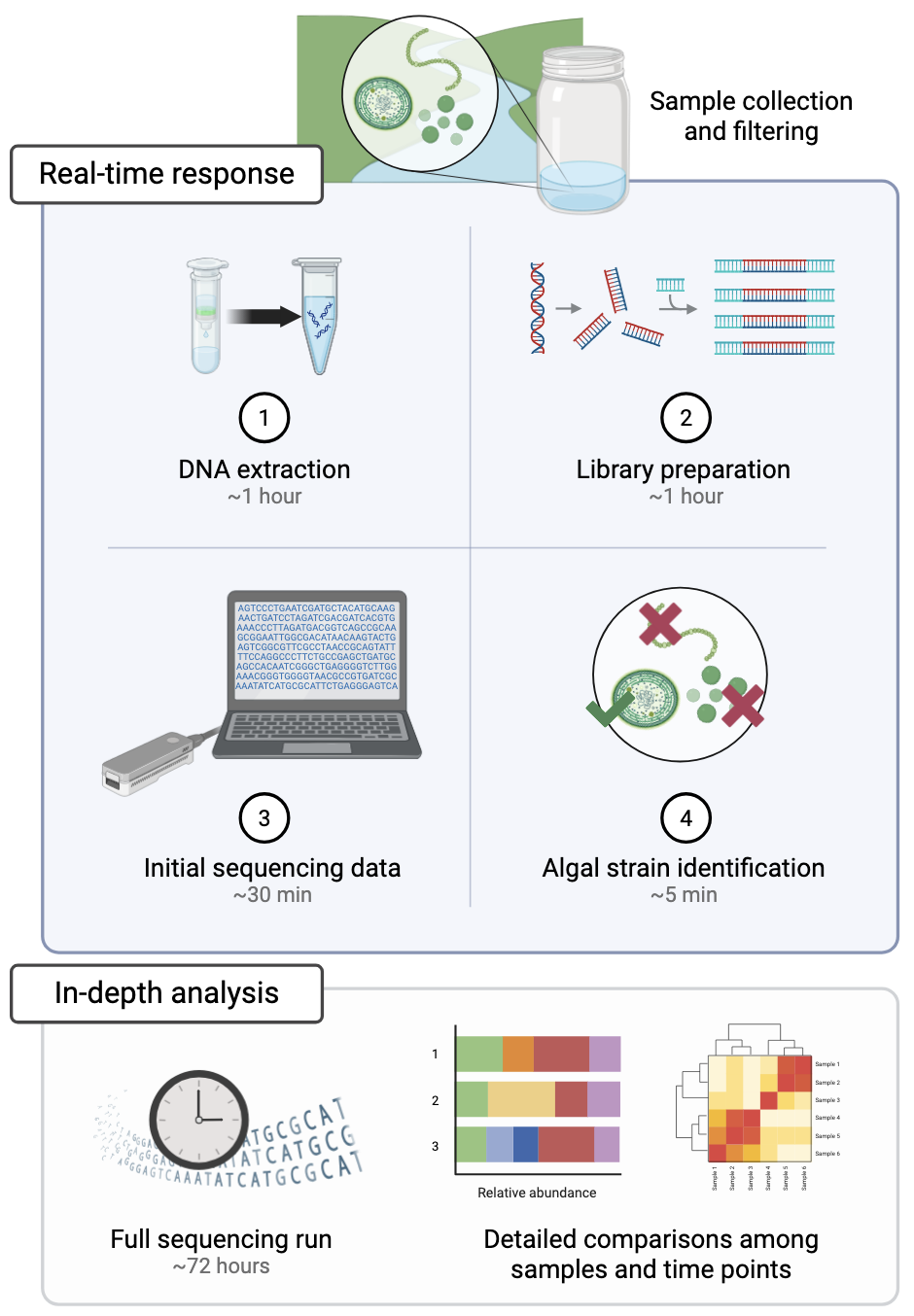
For this project, we aim to develop a real-time monitoring solution for cyanoHABs in the Hudson River using Oxford Nanopore MinION long-read sequencing technology to identify microbial strains in the field. By leveraging existing long-term monitoring efforts, we will also produce detailed time-series data linking microbial communities to environmental conditions, helping identify predictors of bloom formation and toxicity. Ultimately, this work will support more proactive, evidence-based management of water quality while creating opportunities for public engagement through accessible demonstrations of real-time environmental genomics.