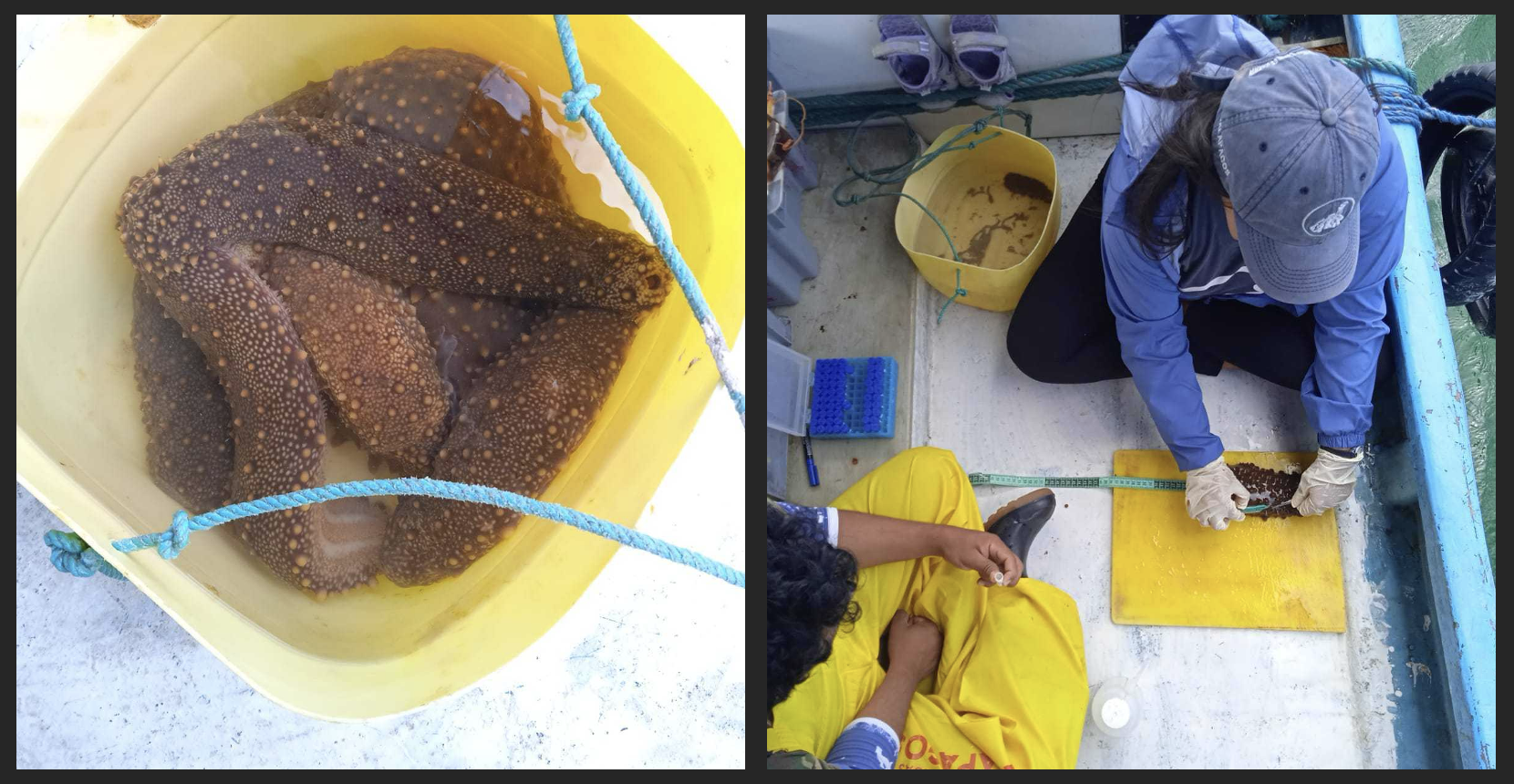
Brown Sea Cucumber
Genomics of the endangered brown sea cucumber advances marine conservation in the Galápagos
 Jaime Ortiz Pachar
 The brown sea cucumber (Isostichopus fuscus) plays a critical role in marine ecosystems by recycling nutrients on the seafloor and providing critical protective benefits to coral reefs, helping maintain healthy ocean habitats. It is also economically important, supporting a global market worth around USD 3 million annually, with most of the product exported to China. After decades of overfishing along the Pacific coast from Mexico to Ecuador, populations collapsed across much of the species’ range.
In Galápagos, wild brown sea cucumbers are legally harvested under a strictly regulated artisanal fishing system. This approach is guided by science and continuous monitoring, and fishing is only permitted when populations have recovered sufficiently. However, it does not consider genetic information.
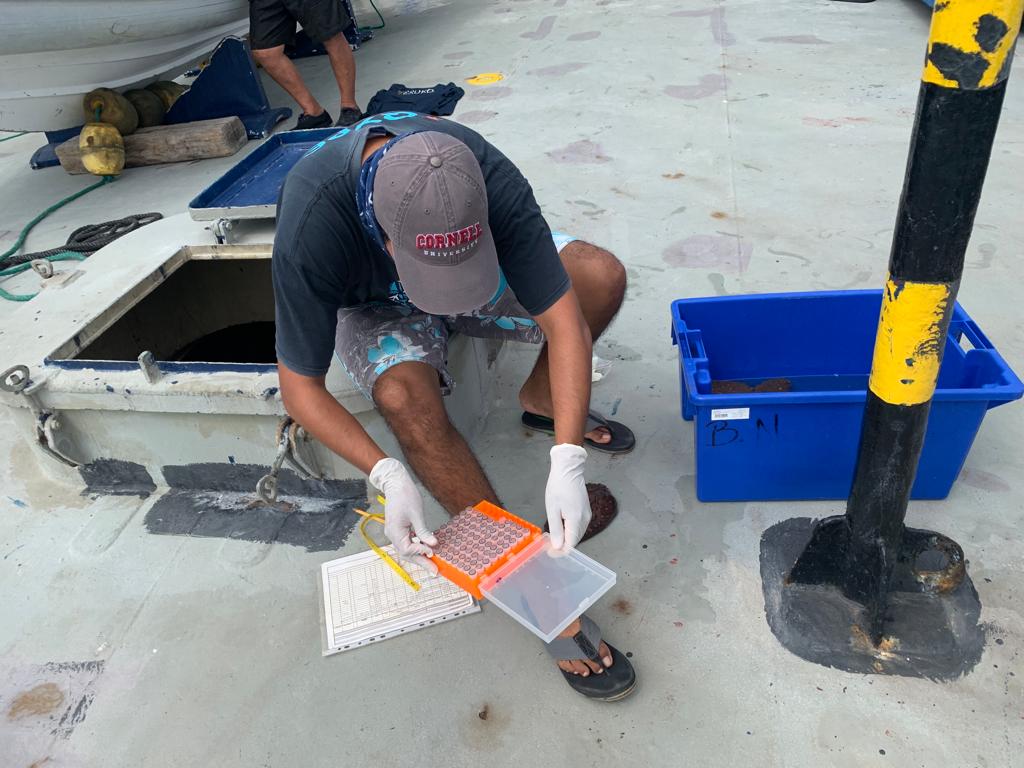
Our aim is to help managers to track genetic diversity across populations, detect early signs of stress linked to overfishing or climate change, and identify areas where populations may be at risk. This information can be used to set fishing limits informed not only by population size, but also by genetic diversity and adaptive potential.